Central and Ducted Heat Pumps in Fredericton
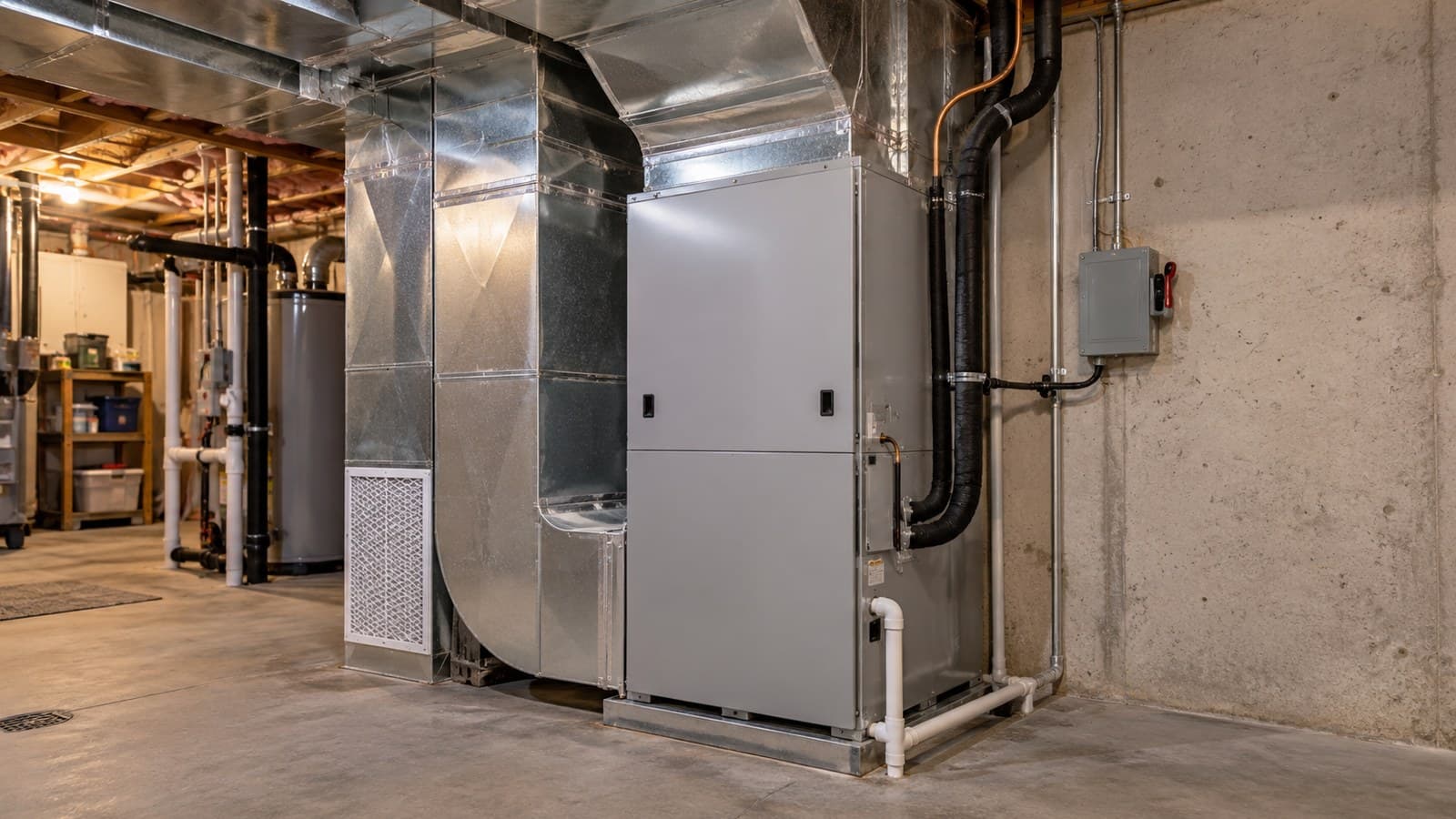
A central heat pump uses an air handler or an existing forced-air system to distribute heating and cooling through ducts. It is usually the most natural heat-pump option when a home already has ductwork that reaches the rooms people use and that ductwork can handle the required airflow.
When a central heat pump is a good fit
Central systems work best when supply registers and return-air paths already serve the home effectively. If some rooms have always been difficult to heat or cool, the duct system should be assessed before a new heat pump is selected. A larger outdoor unit will not correct weak distribution.
Heat-pump air handler or furnace add-on?
One approach replaces the existing furnace or electric air handler with a heat-pump air handler and appropriate auxiliary heat. Another approach adds a heat-pump coil to a furnace that remains available as backup. The second arrangement is often called a hybrid or dual-fuel system when the backup furnace uses fuel.
The best option depends on the condition of the existing furnace, the duct system, electrical capacity, heating load and the homeowner's preference for backup heat. See heat pump versus furnace for a broader comparison.
Expect different supply-air temperatures
Heat pumps generally deliver lower supply-air temperatures than combustion furnaces and may run for longer periods. That does not automatically indicate poor performance. The important measures are whether the home reaches setpoint, whether airflow is adequate, and whether the system can meet the design load with its planned backup heat.
Ductwork still has to be evaluated
Adding a heat-pump coil changes airflow resistance. Return-air capacity, filter pressure, branch sizing and leakage can all affect performance. The ducted heat pump page covers those airflow details.
Controls and backup heat
Central systems need a clear control strategy. A heat-pump-only air handler may use auxiliary electric heat during defrost and at low outdoor temperatures. A furnace add-on needs controls that determine when the furnace should take over or assist. That strategy should be established before installation, not during the first cold snap.
What to ask for in a central-system quote
- Exact outdoor unit and indoor coil or air-handler model numbers.
- Published heating capacity at low outdoor temperatures.
- Whether the existing ducts and returns will be measured or assessed.
- What happens to the current furnace, air handler and thermostat.
- Electrical work and auxiliary-heat requirements.
- Filter type and service access.
- Commissioning and warranty terms.
New Brunswick incentives
SaveEnergyNB currently lists separate incentive categories for central ducted air-source heat pumps and furnace heat-pump add-ons. Equipment and process requirements apply, so confirm the current rules on the New Brunswick rebate page before relying on an incentive amount.