Heat Pump vs Furnace
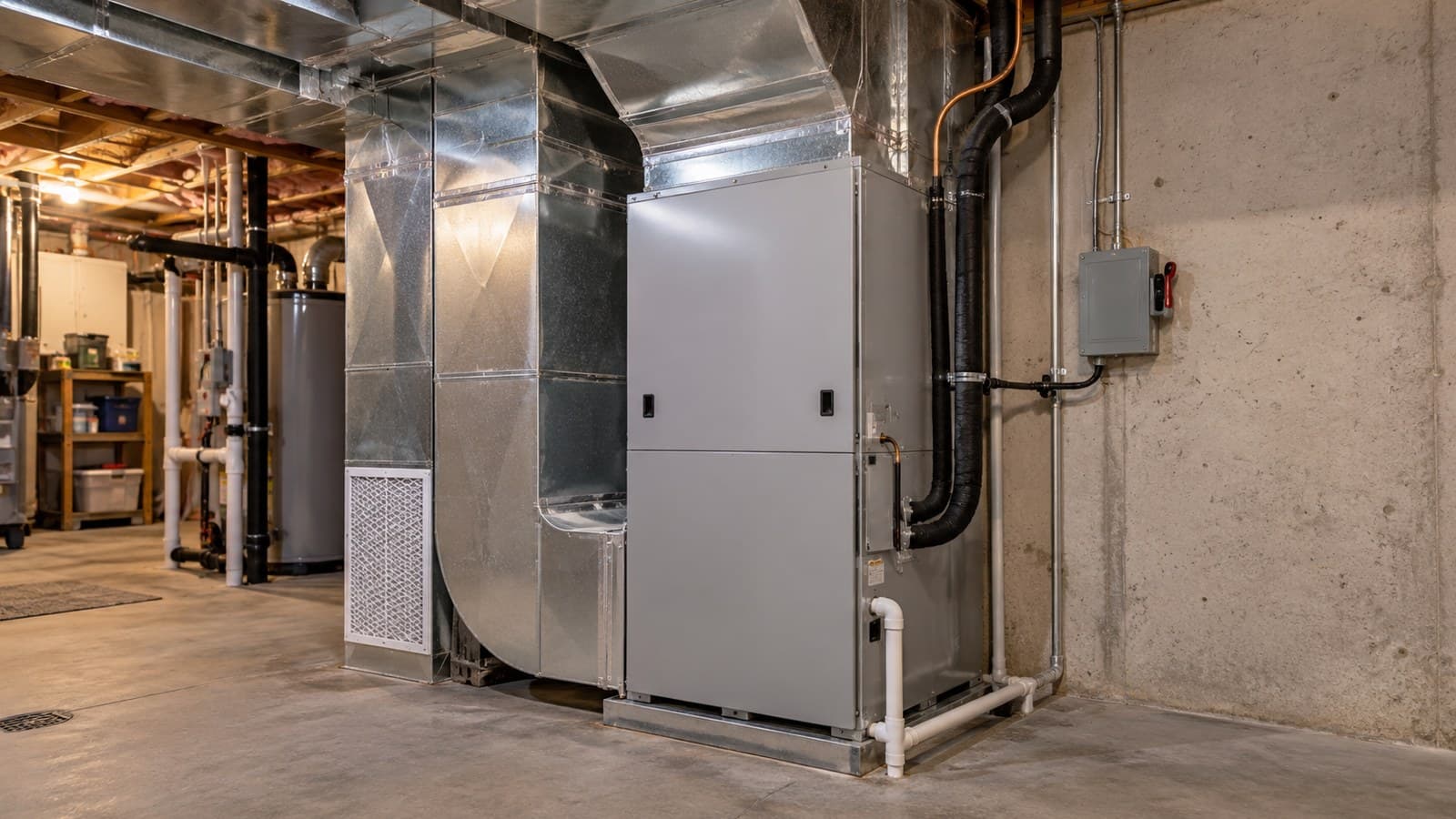
A furnace and a heat pump can both use a home's duct system, but they produce heat differently. A furnace creates heat through combustion or electric resistance. A heat pump transfers heat from outdoor air and can also provide cooling in summer.
Supply-air temperature and run time
Furnaces typically deliver hotter air in shorter cycles. Heat pumps generally deliver milder air for longer periods. After a change from a furnace to a heat pump, supply air can feel less hot at the register even when the home is maintaining the thermostat setpoint normally.
Existing ductwork still matters
A heat pump does not correct poor ducts. If a bedroom has always had weak airflow, adding a new coil and outdoor unit may make that weakness more noticeable. Return-air capacity, branch sizing, leakage and static pressure should be considered before the furnace is removed. See ducted heat pumps.
Heat pump only
A central heat-pump system can replace a furnace with an air handler and planned auxiliary heat. This can be a good fit when the ductwork is suitable and the electrical service can support the new equipment. The backup strategy should be clear before the system is installed.
Heat pump plus furnace
A furnace can also remain as backup in a hybrid system. The heat pump handles much of the heating load, while controls bring the furnace in when required by outdoor conditions or system settings. The furnace, coil and controls need to be designed to work together.
Cold-weather performance
Low-temperature heat-pump capacity should still be reviewed even when a furnace remains as backup. Better cold-weather performance can reduce how often the backup system is needed. See cold-climate heat pumps.
Cooling
A heat pump provides cooling as part of the same refrigeration system. A furnace alone does not. A home with a furnace and separate central air conditioner may be able to replace the air conditioner with a heat pump while keeping the furnace for backup, depending on system compatibility.
Maintenance
Furnaces and heat pumps have different service needs. A heat pump adds an outdoor coil, defrost controls and refrigeration components. A combustion furnace has its own burner, venting and safety requirements. A hybrid system keeps both sets of equipment in the maintenance plan.
When replacement is already due
If the existing furnace is near the end of its life, compare the cost and scope of another furnace with a central heat-pump air handler. If the furnace is still in good condition, a heat-pump add-on may be a more practical transition. The replacement page covers those decisions in more detail.
Questions to ask before choosing
- Will the furnace stay, be removed or become backup?
- What low-temperature capacity does the proposed heat pump provide?
- Are the existing ducts and returns suitable?
- What electrical work is required?
- How will the controls decide when backup heat operates?
- What current incentives apply to the proposed equipment?
Check the New Brunswick rebate guide for current program information and use the installation page when you are ready to scope the project.