Heat Pump Repair in Fredericton
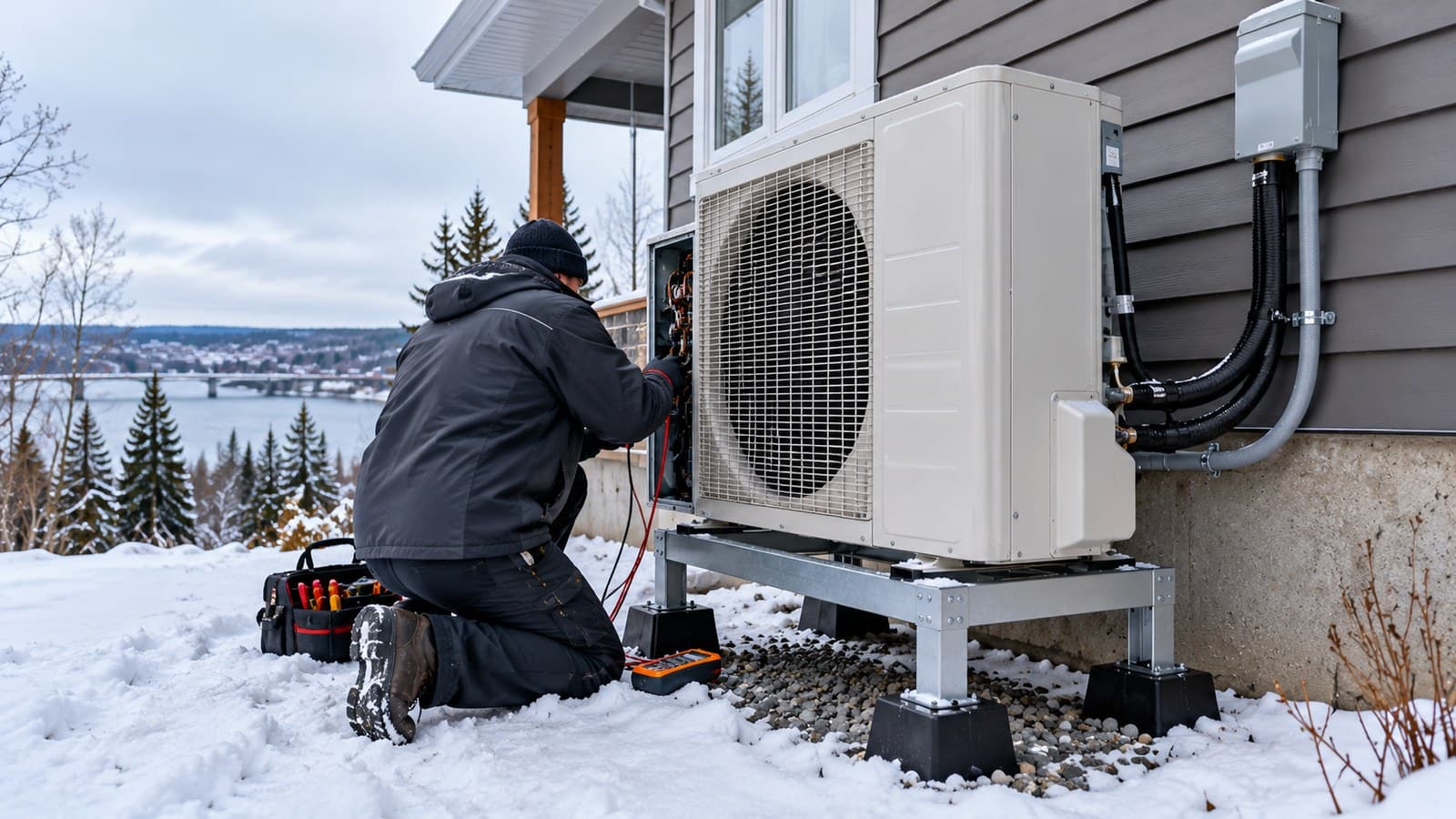
Heat pump repair is appropriate when a system that previously worked well can no longer maintain temperature, develops persistent ice, leaks water, makes a new mechanical noise, or repeatedly shows a fault. Homeowners can make a few safe observations before requesting service, but electrical and refrigerant work should be left to a qualified technician.
Heat pump not heating
Confirm that the thermostat or controller is in heat mode, the setpoint is above room temperature, the indoor filter is clean, and the outdoor unit is not blocked by snow. If the system is running but the air remains close to room temperature after a reasonable period, move to diagnosis rather than repeatedly changing settings. The heat pump not heating guide covers safe checks in more detail.
Weak airflow
Reduced airflow can come from a dirty filter, a dirty indoor coil, a fouled blower wheel, blocked supply registers or a return-air problem. On ducted systems, high static pressure can also reduce delivered airflow. If cleaning a normal homeowner-serviceable filter does not restore airflow, the cause needs to be identified before the system is pushed harder.
Outdoor icing
Light frost on the outdoor coil in heating mode is normal. Heat pumps periodically enter a defrost cycle to clear that frost. Steam and water around the outdoor unit can also be normal during defrost. Persistent ice that remains after defrost, blocks the fan, or quickly returns is not normal and can point to airflow, sensor, drainage or refrigerant-circuit problems.
Water from an indoor unit
Condensate should leave through a properly pitched drain. A blocked drain, a frozen section of drain line, a dirty pan or an installation problem can allow water to escape indoors. Shut the system down if water is reaching electrical components.
New or unusual noises
Changes in fan speed, soft refrigerant sounds and a temporary shift during defrost are normal. Grinding, shrieking, repeated hard clicking, a fan striking ice, or a new vibration should be investigated. Note whether the sound is coming from the indoor or outdoor unit and whether it happens only during defrost.
Electrical and control faults
A breaker that repeatedly trips, a burning smell, visible sparking, or a control board that repeatedly reports a fault should not be reset over and over. Turn the system off using normal controls if it can be done safely and request service. Do not open electrical cabinets or bypass safety controls.
Possible refrigerant problems
Weak heating combined with unusual icing, oil staining near a joint, or a confirmed leak can point to the refrigerant circuit. Adding refrigerant without identifying the cause is not a complete repair. Refrigerant diagnosis and service should be performed by a qualified technician.
Repair or replacement?
Age matters, but it is only one factor. A relatively new system with a failed sensor or control component is very different from an older unit with repeated compressor, coil or refrigerant problems. If repair costs are accumulating or the system never had enough capacity for the home, review the replacement page before authorizing another major repair.
What to include in a repair request
- What changed and when the problem started.
- Any fault code shown by the controller.
- Whether the indoor and outdoor fans are running.
- Whether the outdoor coil is lightly frosted or heavily iced.
- Whether some rooms still heat normally.
- The condition of the filters.
- The property location and system type.
Those details help distinguish an airflow issue, a control problem and a more serious equipment fault before the service visit.