Ductless vs Ducted Heat Pumps
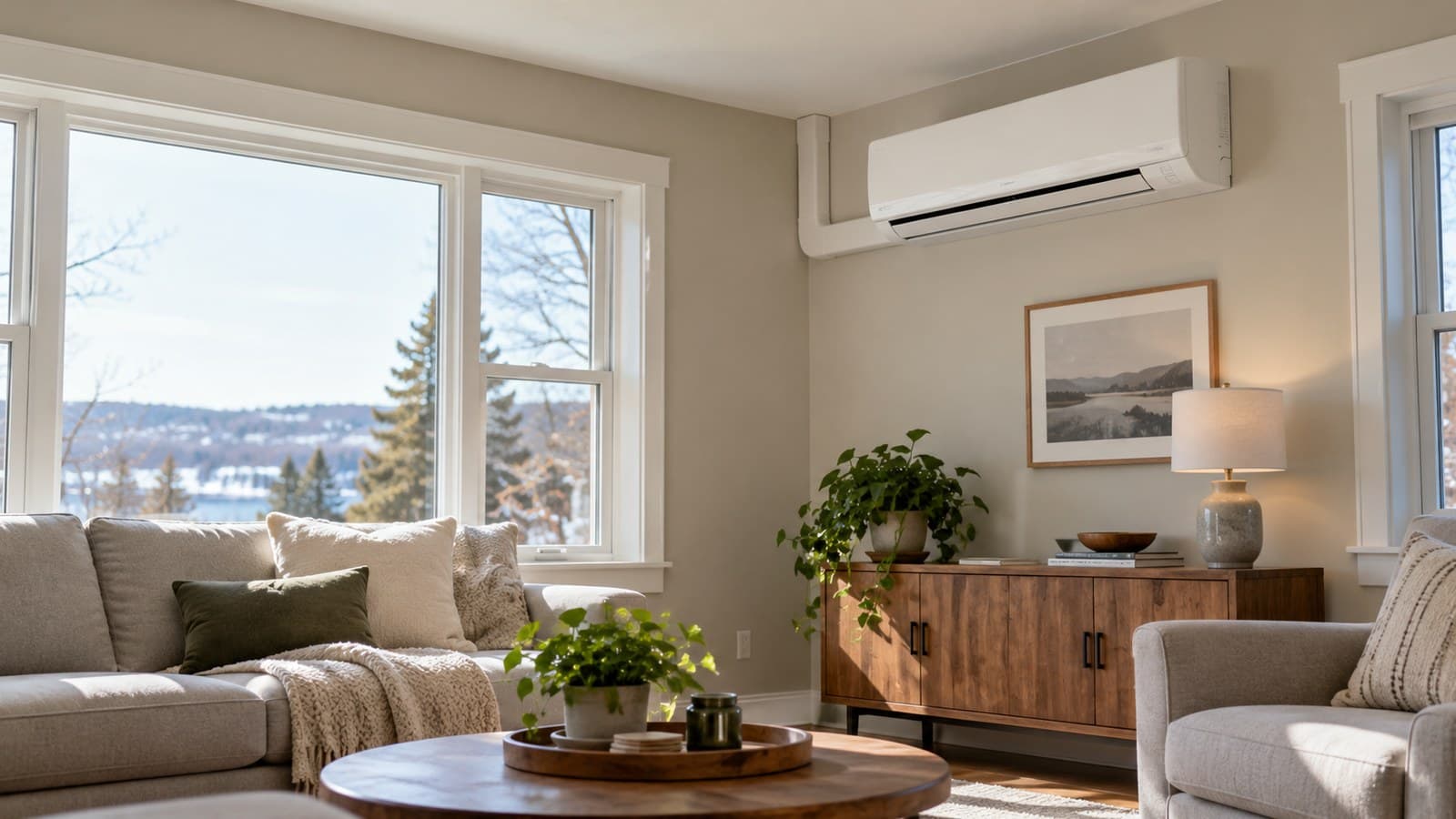
Ductless and ducted heat pumps use the same basic refrigeration process. The main difference is how heating and cooling are distributed through the home. Ductless systems use indoor heads in individual zones. Ducted systems use an air handler and a network of supply and return ducts.
Ductless heat pumps
A ductless system is usually easier to retrofit when the home does not have suitable forced-air ducts. One outdoor unit can serve one or several indoor heads, depending on the equipment. Each indoor unit conditions the space it can reach, which can provide useful zoning but also means closed bedrooms and separate floors need to be considered carefully.
Ducted heat pumps
A ducted system distributes air through registers. It can be a good fit when existing ducts already serve the main rooms and can handle the required airflow. Ducted systems also allow central filtration, but weak returns, leakage and undersized branches can limit performance.
Installation complexity
Ductless work usually involves wall penetrations, refrigerant lines, condensate drains and one or more indoor heads. Ducted work can be straightforward when good ducts already exist, but it becomes a larger renovation when trunks, returns or an air handler need major changes.
Zoning and room control
Ductless systems make it easier to control separate zones independently. Central ducted systems usually use fewer thermostats and distribute air throughout larger areas. Either approach can be zoned, but the hardware and cost are different.
Appearance
Ductless systems place visible indoor units on walls, ceilings or near the floor. Ducted systems hide most equipment in a mechanical area and use registers in the rooms. Appearance is a legitimate design consideration, but it should not override heating load and airflow.
Filtration
Ducted systems can use larger central filters. Ductless heads have smaller filters intended mainly to protect the unit and capture larger particles. Homeowners with specific indoor-air-quality goals should discuss filtration separately from the heat-pump choice.
Cold-weather operation
Both system types can use cold-climate equipment. Both need adequate low-temperature capacity, outdoor-unit clearance and a backup-heat plan where required. See the cold-climate heat pump guide.
Maintenance
Ductless systems require filter cleaning at each indoor unit and periodic cleaning of coils and blower components. Ducted systems concentrate filtration at the air handler but also depend on the condition of the ducts, returns and blower.
When ductless may make more sense
- The home has no usable forced-air ducts.
- Only certain areas need new heating and cooling.
- Room-level control is important.
- Adding new ducts would require substantial demolition.
When ducted may make more sense
- Existing ducts already reach the occupied rooms.
- Central filtration is important.
- You prefer fewer visible indoor units.
- The existing forced-air system is already due for replacement.
Some homes use both approaches. A central system can serve most of the house while a separate ductless unit serves a finished addition or another area that is difficult to reach with ducts. If you are ready to compare equipment, start with heat pump installation in Fredericton.