Heat Pump Installation in Fredericton
A residential heat pump project in Greater Fredericton starts with the home: heating load, existing distribution, electrical capacity, outdoor-unit location and the level of backup heat required in winter.
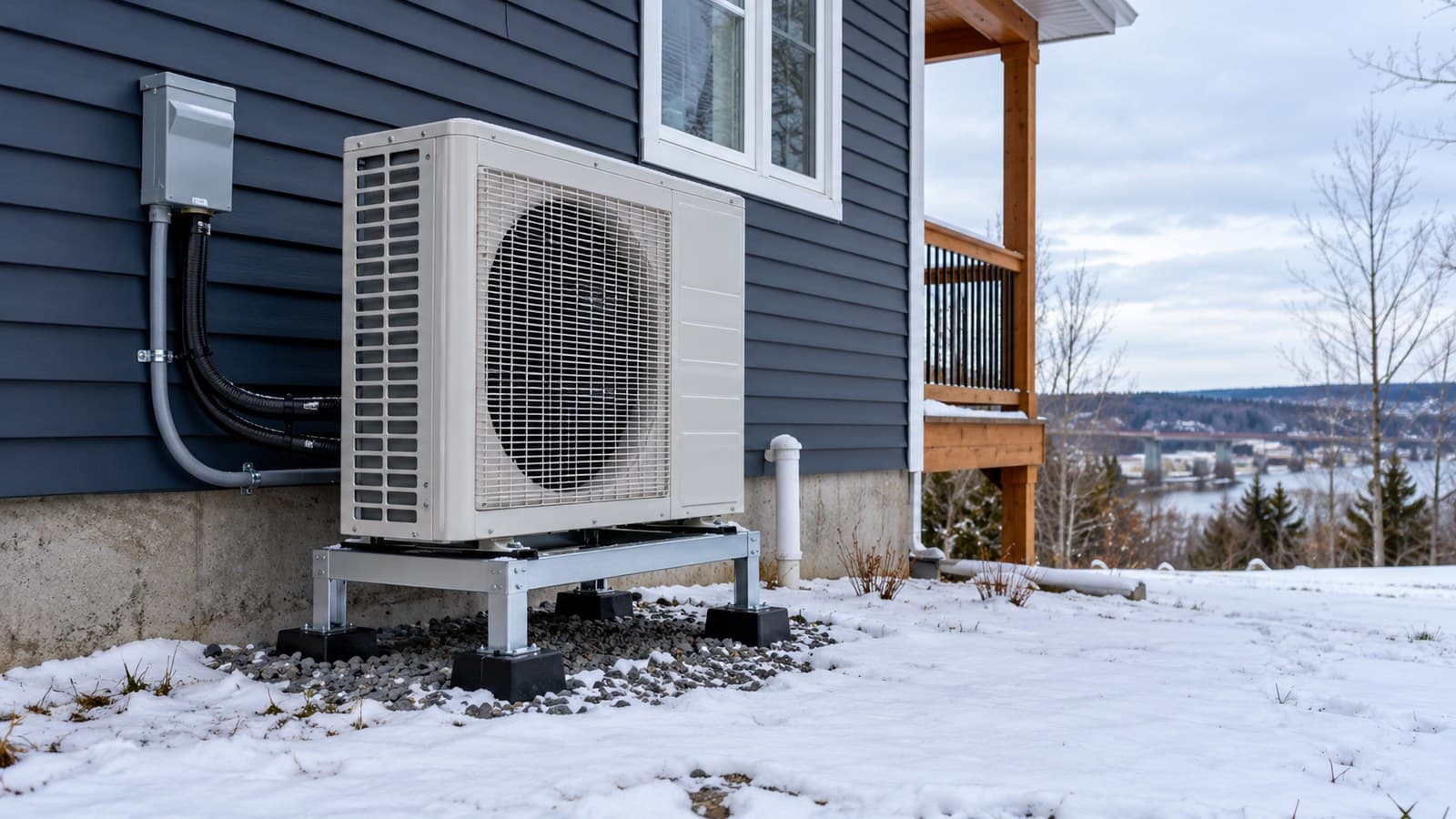
A heat pump installation in Fredericton should be planned around winter heating performance first. Cooling matters in summer, but the equipment still has to keep the home comfortable when outdoor temperatures are well below freezing and the system is cycling through defrost.
Start with the house, not the equipment brochure
A useful installation assessment looks at how the home loses heat, which rooms are hardest to keep comfortable, whether existing ducts are worth using, what the electrical service can support, and where an outdoor unit can operate without being buried by snow or roof runoff. Floor area alone is not enough to size a system.
Environment and Climate Change Canada's 1991 to 2020 normals for Fredericton Airport show a January daily average of about -9.2 °C and an average daily minimum of about -14.6 °C. That is why published low-temperature capacity matters here. A model that performs well at mild test conditions may deliver much less heat during a cold snap. View the official Canadian Climate Normals.
Ductless or central?
If the home does not have usable forced-air ducts, a ductless heat pump is often the simpler retrofit. If supply and return ducts already reach the main living areas and bedrooms, a central heat pump may make better use of the existing distribution system. Some homes are better served by a hybrid layout with central air in one part of the house and a ductless zone elsewhere.
What should be checked during a site visit
- Heating load and the rooms that lose comfort first.
- Existing ducts, returns and airflow where a central system is being considered.
- Electrical service, breaker space and other large electrical loads.
- Outdoor-unit clearance, snow storage, drainage and service access.
- Indoor-unit or air-handler locations.
- Line-set routes, wall penetrations and condensate drainage.
- Backup heat for defrost periods and the coldest weather.
Electrical work is part of the scope
Heat-pump equipment generally requires dedicated electrical work and a disconnect. In New Brunswick, electrical construction and maintenance must be performed by licensed electricians or supervised apprentices. Permit requirements depend on the work being completed, so the electrical portion should be identified before installation rather than added as an unexpected change later. See New Brunswick electrical licensing information.
Outdoor placement matters every winter
The outdoor unit needs clear airflow, room for service, and a path for defrost water. It should also be positioned with snow accumulation and roof runoff in mind. A raised stand can help keep the coil above normal snow buildup, but height alone does not solve poor drainage or blocked airflow.
Commissioning should be included
A completed installation is more than equipment mounted on a wall or pad. Refrigerant piping should be properly evacuated and checked, controls should be tested, the system should be run in heating mode, and the homeowner should know how to access filters and recognize a normal defrost cycle.
Compare the complete scope
When comparing proposals, look for exact model numbers, low-temperature heating performance, electrical work, mounting, drainage, line-set protection, removal of old equipment, commissioning and warranty terms. The heat pump cost guide explains these cost drivers in more detail.
Rebates and program paperwork
New Brunswick incentive programs have their own equipment and process requirements. A quote request on this website is not a rebate application. Check the current New Brunswick heat pump rebate guide and confirm eligibility on the official program site before making a purchase decision.
Common questions
Can one ductless head heat an entire house? Sometimes in a small, open layout, but closed bedrooms and separate floors often need their own distribution plan.
Should existing baseboards be removed? Not automatically. They can remain useful as backup heat or for rooms that are not well served by the heat pump.
What if an existing heat pump suddenly stopped heating? Start with repair. A sudden fault does not automatically mean the system needs replacement.