Cold-Climate Heat Pumps in New Brunswick
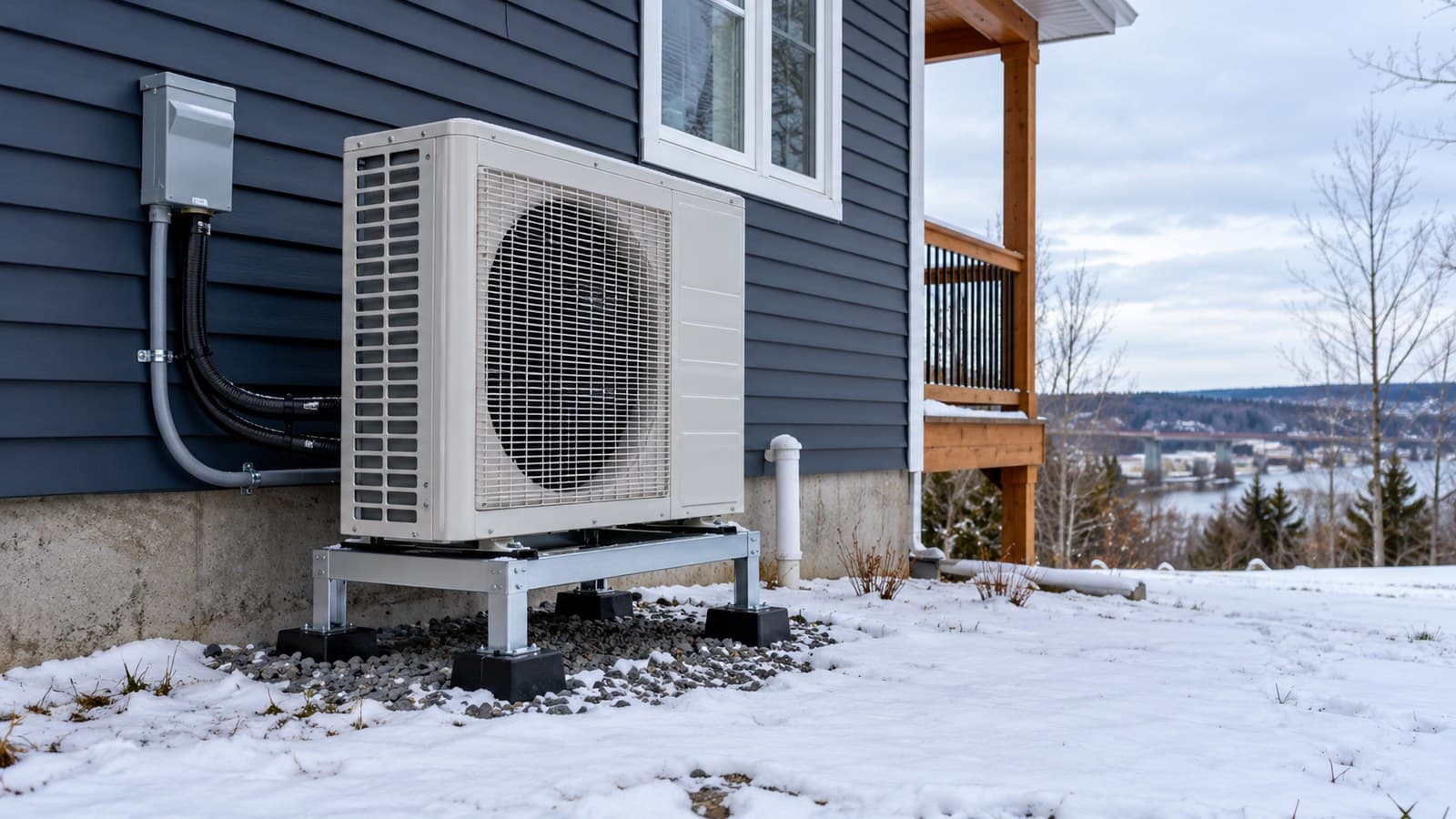
Cold-climate heat pumps are designed to continue providing useful heating capacity at low outdoor temperatures. That does not mean every model performs the same way in winter, and it does not mean a heat pump can always cover a home's full heating load without backup.
Why cold-weather performance matters in Fredericton
Environment and Climate Change Canada's 1991 to 2020 normals for Fredericton Airport show a January daily average of about -9.2 °C and an average daily minimum of about -14.6 °C. Those averages are enough to make low-temperature heating data a practical purchase criterion. See the official Canadian Climate Normals.
Operating temperature is not the same as full heating capacity
A manufacturer may state that a heat pump can operate at a very low outdoor temperature. That only confirms that the equipment can continue running under those conditions. It does not tell you how much heat the system can deliver at that temperature. Ask for the published heating-capacity table for the exact model being quoted.
Capacity falls as outdoor temperature falls
Air-source heat pumps have less heat available to move as outdoor air gets colder. Their coefficient of performance, or COP, also changes with temperature and operating conditions. A model that performs strongly at mild temperatures can still need backup heat during colder periods.
Backup heat is part of the design
Backup can come from electric baseboards, auxiliary electric heat in an air handler, or a furnace in a hybrid system. The goal is not to eliminate backup at any cost. The goal is to know when it is expected to operate and to make sure it is available when the heat pump is in defrost or cannot meet the full load.
Defrost is normal
Outdoor coils can collect frost in heating mode. The system periodically reverses operation to warm the outdoor coil and clear that frost. Steam, dripping water and a short pause in indoor heating can be normal during this process.
Persistent ice is not normal
Ice that remains after defrost, blocks the fan, or quickly rebuilds can indicate a problem with airflow, drainage, sensors, controls or the refrigerant circuit. Do not chip ice from the fins with tools. If the unit cannot clear itself, request heat pump repair.
Outdoor placement affects winter reliability
The unit needs clear airflow and enough height and surrounding space to stay above normal snow accumulation. Roof runoff and ploughed snow should not repeatedly land on the coil. Defrost water also needs somewhere to drain without building a large ice mass under the equipment.
Model selection and sizing
Compare heating capacity at relevant low temperatures, not just nominal size or cooling efficiency. Two units marketed in the same size class can retain different amounts of heating capacity in cold weather. Installation quality and the home's heating load matter just as much as the label on the outdoor unit.
Before winter
Clean or replace filters, clear vegetation and debris from the outdoor unit, verify that backup heat works, and run the heat pump in heating mode before the first hard freeze. The maintenance page covers routine checks, while the not heating guide covers safe troubleshooting.