Heat Pump Replacement in Fredericton
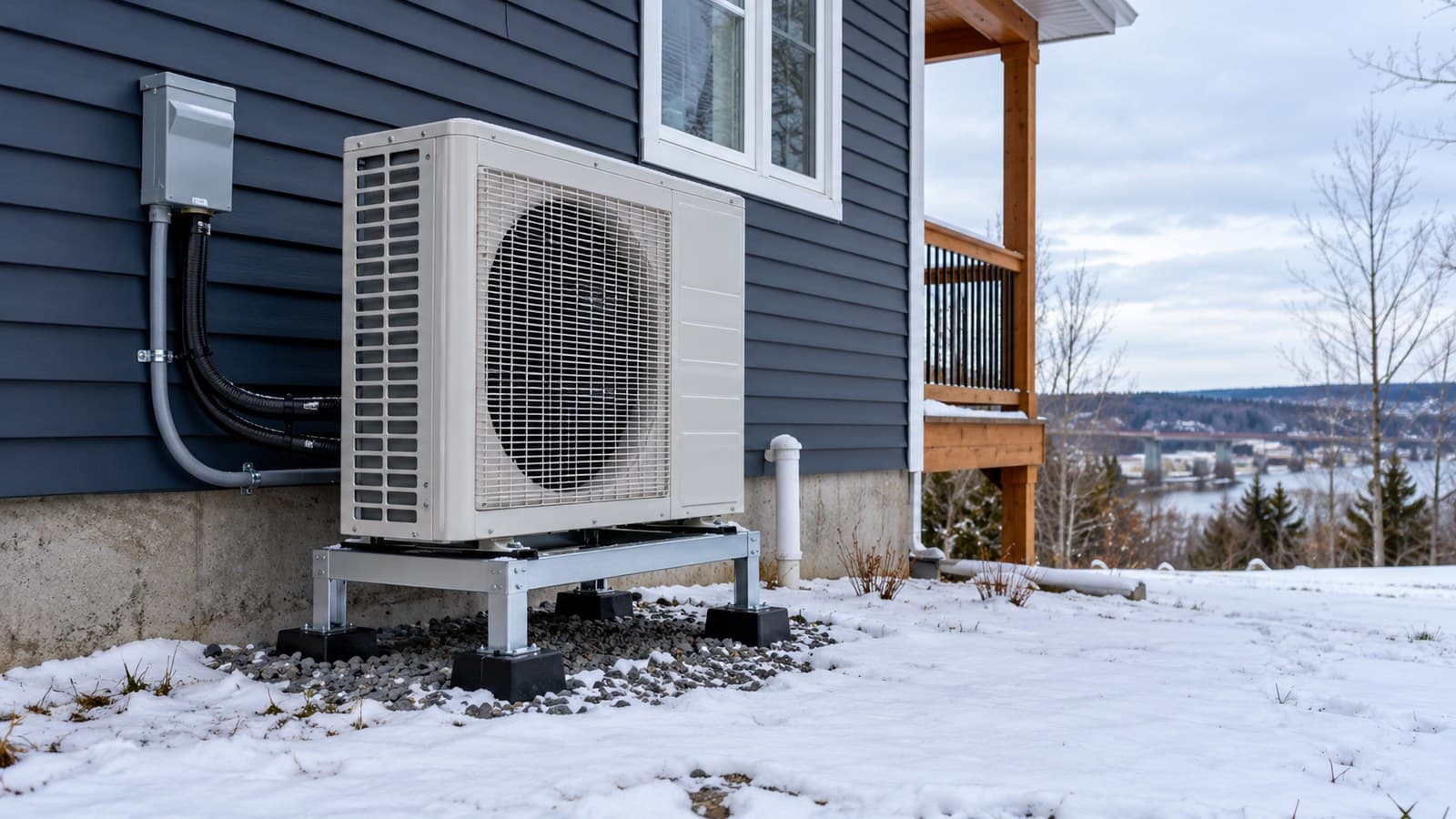
Heat pump replacement makes sense when a major repair no longer restores reliable operation, when repeated failures are adding up, or when the original system was poorly matched to the home. A replacement should correct the underlying problem rather than simply install a newer version of the same design.
Age is useful context, not a decision by itself
Residential air-source heat pumps are often discussed in a planning range of roughly 10 to 15 years, but actual service life varies with installation quality, run time, maintenance, corrosion, ice damage and operating conditions. A failed control component on a newer system may be an obvious repair. A major compressor or coil failure on older equipment deserves a broader replacement discussion.
Look at the repair history
One repair does not make a system unreliable. Repeated winter failures, recurring leaks, multiple control-board replacements or a growing list of parts can change the economics. Ask what the current repair is expected to solve and whether another major component is already showing wear.
Do not repeat a comfort problem
If the existing system never heated closed bedrooms, a finished basement or an upper floor properly, replacing it with the same capacity and the same indoor-unit layout will probably preserve the same problem. Replacement is the opportunity to reconsider zoning, ductwork, indoor-unit placement and backup heat.
Cold-weather performance should be reviewed again
Published low-temperature capacity should be part of the replacement decision. Equipment that appears similar by nominal size can deliver different heating capacity as outdoor temperature falls. Review the cold-climate heat pump guide before comparing replacement proposals.
Changing system type can be reasonable
A failed single-zone ductless system does not have to be replaced with another single-zone system. Depending on the house, the better path may be multiple ductless zones, separate single-zone systems, or a central air handler if suitable ductwork exists. Likewise, a furnace add-on system can sometimes be replaced by a dedicated heat-pump air handler.
Electrical, controls and drainage belong in the quote
New equipment may require a different breaker, disconnect, thermostat or control strategy. Outdoor-unit mounting and condensate drainage should also be reassessed rather than copied automatically from the old installation.
Can existing indoor units or line sets stay?
Only when the manufacturer supports the equipment combination and the existing components are compatible, clean and in good condition. Reusing parts simply because they are already in place can create performance and warranty problems.
Compare replacement proposals carefully
- Exact indoor and outdoor model numbers.
- Low-temperature heating capacity.
- Electrical work and controls.
- Whether line sets are replaced or reused.
- Outdoor mounting and drainage.
- Removal and disposal of old equipment.
- Commissioning and warranty terms.
The cost guide explains why these scope differences matter. If the system failed recently and has not yet been diagnosed, start with repair before assuming replacement is required.